
The Digital Waste Shipment System (DIWASS) is transforming the way cross-border waste shipments are managed across Europe. For Belgian businesses, this development introduces new compliance requirements while also creating opportunities to streamline administrative processes and improve operational efficiency. Discover what is changing, how Belgium's hybrid approach fits into the new European framework, and the role digital solutions can play in supporting a smooth transition.
DIWASS is live: what does the new EU Waste Shipment System mean for businesses?
Since 21 May 2026, the European Union’s Digital Waste Shipment System (DIWASS) has officially been in operation. This new platform digitizes the management of cross-border waste shipments and marks an important step in the digital transformation of the circular economy. For organizations involved in transporting, processing, or recycling waste across European borders, the new regulations introduce significant changes and new compliance requirements.
What is DIWASS?
DIWASS is the European Union’s new digital platform for managing cross-border waste shipments. The system streamlines communication between waste management operators and competent authorities by providing a central environment where all required information can be exchanged electronically.
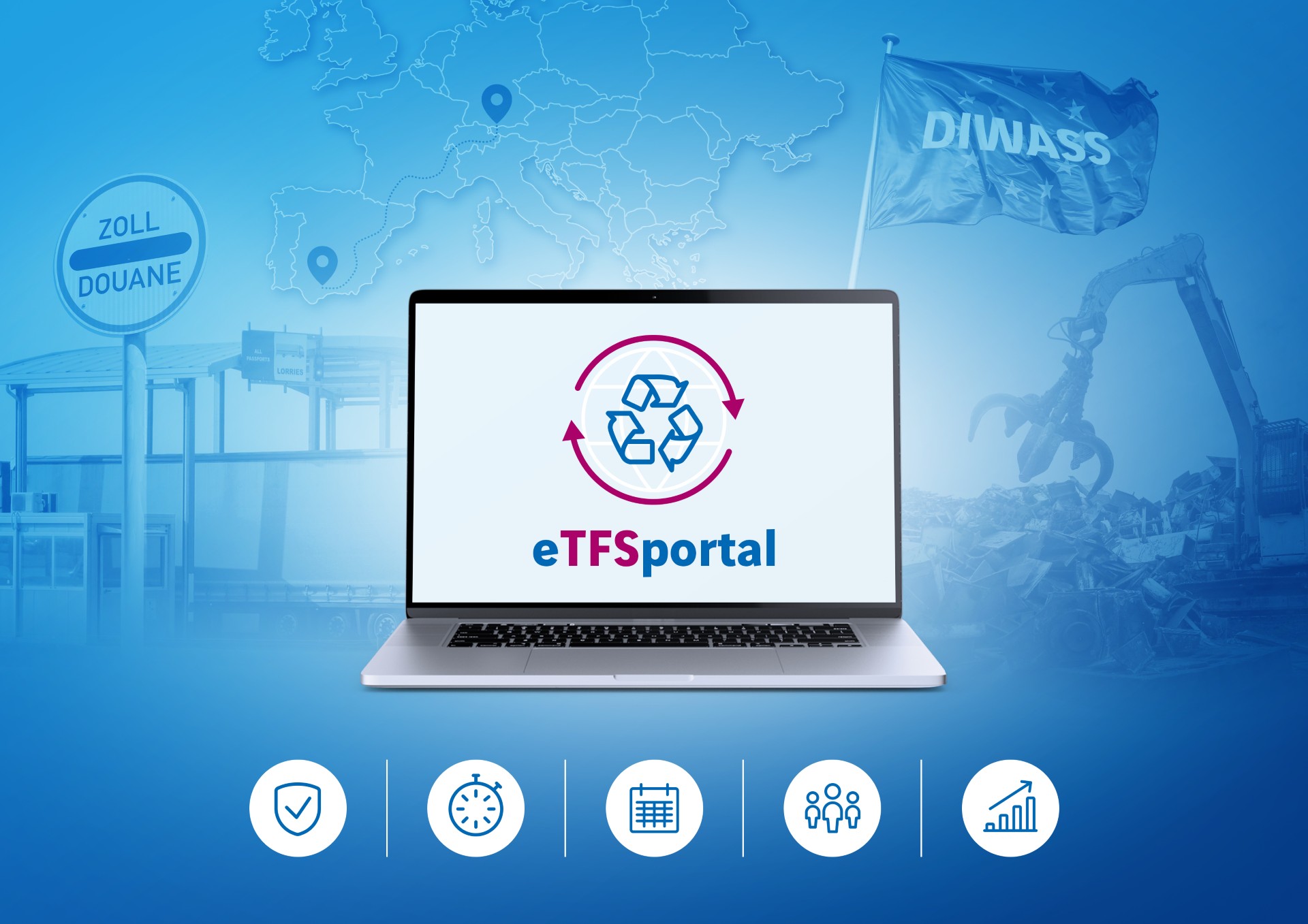
Companies can create, manage and submit their applications directly through the DIWASS web interface. In addition, the platform supports integration with specialized software solutions, enabling automated data transfer and more efficient process management. One example of such an integration is the eTFSportal from Axians eWaste.
Which shipments are affected?
The introduction of DIWASS primarily affects cross-border waste shipments that are subject to notification and consent procedures, including hazardous waste shipments. The required notifications, approvals, and related administrative processes will be managed digitally through DIWASS.
For non-hazardous Green List waste (Annex III) shipped for recovery or recycling using the Annex VII document, a transitional period for the electronic exchange of accompanying documents remains in effect until 31 December 2026
Belgium adopts a hybrid approach
While DIWASS provides a standardized European framework, implementation differs between Member States. Belgium offers a particularly interesting example. Rather than relying solely on DIWASS, the country has adopted a hybrid approach that combines national and European systems.
Under the Belgian model, the initial notification for a cross-border waste shipment must be submitted through the national OVAM system. After approval has been granted, subsequent shipment declarations and Annex VII shipments can be managed either:
- Directly through the DIWASS interface, or
- Through connected third-party software solutions such as the Axians eTFSportal
This approach allows companies to meet regulatory requirements while retaining flexibility in how they manage day-to-day operations.
Additional benefits provided by third-party software
While the standard DIWASS interface supports the complete regulatory workflow, it is primarily designed for processing individual cases. For businesses handling larger shipment volumes, this can lead to considerable administrative effort because shipments must be entered and managed one by one.
Third-party solutions such as the eTFSportal use the same DIWASS connection but offer enhanced functionality tailored to operational requirements. For example, users can create and process multiple shipments in a single bulk action rather than entering each shipment separately.
This enables companies to:
- Reduce manual data entry
- Minimize administrative workload
- Increase productivity
- Improve operational efficiency
- Gain greater visibility of international material flows
Is it possible to fully replace OVAM with third-party software?
No. According to OVAM, the notification process must still be completed through the national system and cannot be replaced by third-party software.
However, once a notification has been approved, businesses are free to choose how they handle shipment declarations and Annex VII transports. At this stage, connected solutions such as the eTFSportal can significantly simplify operations and help create a more seamless digital process.
How to prepare for DIWASS
Organizations involved in cross-border waste shipments should review their internal processes now and ensure that the new DIWASS requirements are incorporated into both their operational workflows and compliance planning.
Particularly in countries using hybrid models, companies need to understand which steps must be completed via national systems and which can be handled through DIWASS or integrated software solutions.
Axians eWaste supports the transition
Axians eWaste helps organizations navigate the transition to DIWASS by supporting both the technical and operational aspects of implementation.
From system integration and data connectivity to practical day-to-day process management, Axians eWaste enables businesses to meet regulatory requirements while maximizing the efficiency benefits of digital waste shipment management.
If you want to learn more about DIWASS and upcoming requirements, join our free information webinars starting in September and discover how to prepare your organization for the next phase of digital waste shipment management.
More information
Would you like to learn more about the impact of DIWASS on your organization and the digital solutions available for managing international waste shipments?
Register for one of the free information webinars:
For more information, visit the Axians eWaste website.